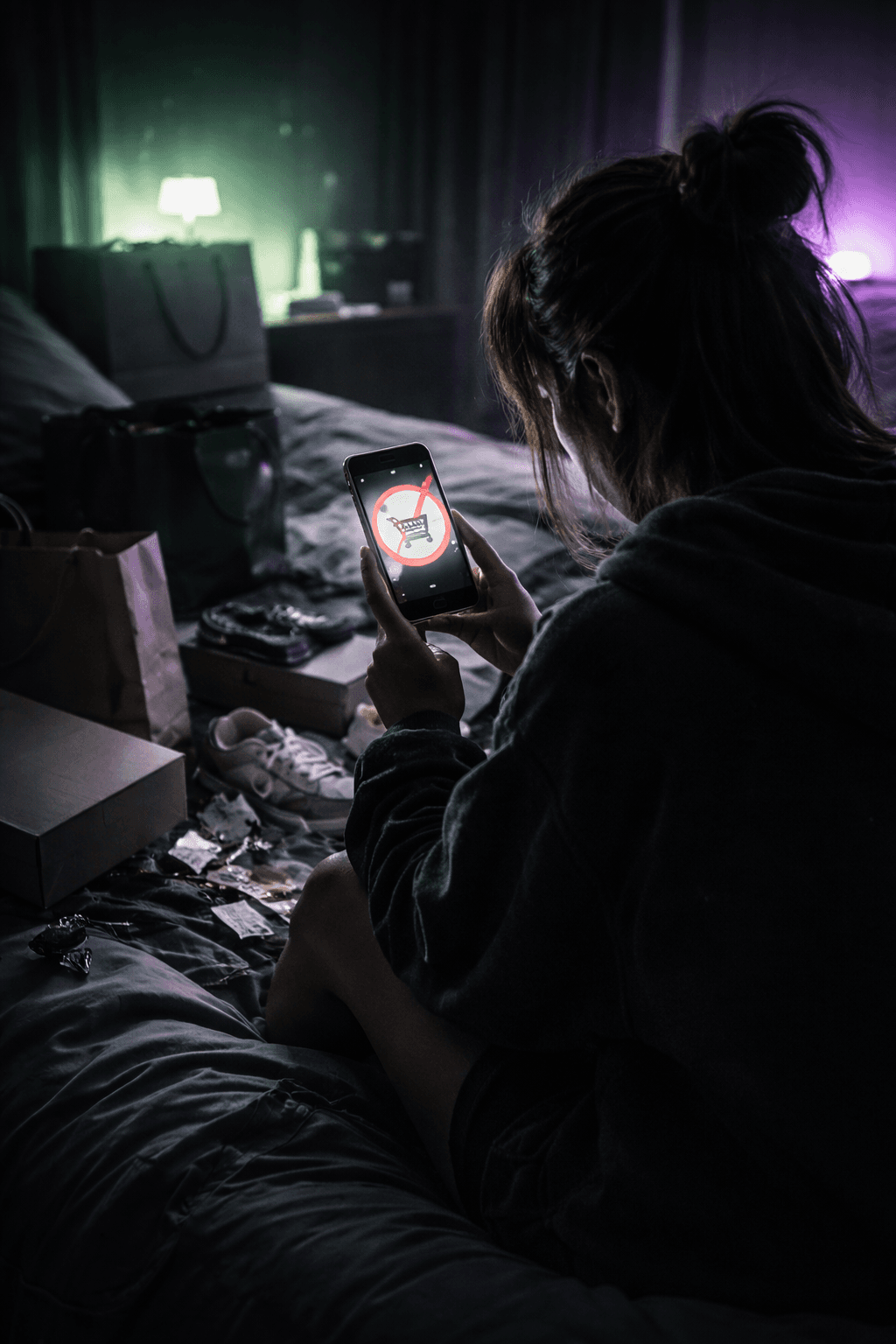
There's a 70,000-person Reddit community that decided, collectively, to just... stop.
Stop buying things they don't need. Stop doom-scrolling into a skincare haul at midnight. Stop letting an algorithm convince them that one more purchase is the missing piece of a life that finally feels complete.
They're calling it No Buy 2025. And it's not what the wellness girlies want you to think it is.
This Isn't a Minimalism Moment. Don't Let Them Spin It.
Here's what the lifestyle brands and "intentional living" influencers are trying to do right now — they're looking at No Buy 2025 and trying to aestheticize it. Package it. Sell you a $40 linen journal to document your anti-consumption journey.
The audacity is actually staggering.
Because what's actually happening on r/NoBuy, in the TikTok comment sections, in the Twitter/X threads going quietly viral — is not a vibe shift toward minimalist cottagecore. It's something rawer than that. More desperate. More honest.
It's a generation rage-quitting the economy that failed them.
How Did We Get Here
To understand the No Buy 2025 movement, you have to understand what Gen Z was handed and told to call an opportunity.
We grew up as the first generation to be algorithmically targeted before we had fully developed frontal lobes. The influencer-to-purchase pipeline was built on us — our attention, our insecurities, our very online existence weaponized into a conversion funnel before we were old enough to recognize what was happening.
The math they sold us:
Work hard → go to college → get a good job
Buy the things → feel better → build a life
Invest in yourself → the returns will come
Except the returns didn't come. Inflation did. Rent did. A job market that asks for five years of experience for an entry-level role did.
And somewhere in 2024, while doomscrolling through another "treat yourself" TikTok between checking a bank account that had no business being checked, something in the collective Gen Z brain just... snapped.
What No Buy Actually Looks Like (It's Not Pretty or Aesthetic)
The media coverage keeps framing this as people cutting out Starbucks and feeling zen about it. That's not what's in the Reddit threads at 2am.
What's actually in those threads:
People confessing they have $11 in their account and are terrified
People realizing they've spent thousands on things that were supposed to make them happy and feel nothing
People tracking their spending for the first time and sitting with the genuine grief of where the money went
People who genuinely cannot tell anymore whether they want something or whether an algorithm decided they should want it
No Buy 2025 isn't aspirational. It's a pressure valve. It's what happens when a generation of chronically online people finally develops enough awareness to see the machine they've been living inside — and flinches.
The Tariff Thing Made It Worse (And More Urgent)
Here's the layer that's accelerating everything right now: economic anxiety isn't abstract anymore.
Tariff talk, price hikes on everyday goods, the very real possibility that the cost of living is about to get measurably worse — it's crashing into a generation that was already barely holding on financially and pushing the "opt out" instinct from a personal choice into something closer to a survival strategy.
When buying less stops being a value and starts being a necessity, the movement changes shape. It gets less philosophical and a lot more urgent.
That urgency is canon in the threads right now. You can feel it.
The Irony That Nobody Can Stop Talking About
There's a specific brainrot irony living rent-free in this whole moment — the No Buy 2025 content is everywhere.
TikToks about not buying things. Hauls of "no buy approved" items. Influencers doing "no buy month" sponsored by... brands. Substack newsletters monetizing anti-consumption discourse. Amazon storefronts full of "minimalist" products.
The machine is so good. It is so, so good.
It took a movement explicitly built around rejecting consumption and found seventeen ways to sell it back to us within six months. And the worst part is we can see it happening in real time and it barely slows anyone down — because the content is good, and we're tired, and it's 1am and the algorithm knows exactly what it's doing.
So What Does Opting Out Actually Mean
Here's the question worth sitting with: if the anti-consumption movement can be consumed, if the rage-quit gets aestheticized, if even your no-buy era can be turned into a brand deal — what does genuine opting out even look like?
Maybe it's boring. Maybe it's invisible. Maybe it looks like:
Not posting about it at all
Buying secondhand with zero documentation
Letting your camera roll die without content
Sitting with wanting something for 72 hours and then forgetting about it completely
The most radical version of No Buy 2025 might just be the one that never makes it to TikTok.
Which, for a generation that was taught that an experience doesn't count unless it's shared — is either the most freeing or the most terrifying reframe imaginable.
Probably both. Definitely both.
The economy didn't just lose our trust. It lost our cart.